
Date and time is TBD
|Webinar Series
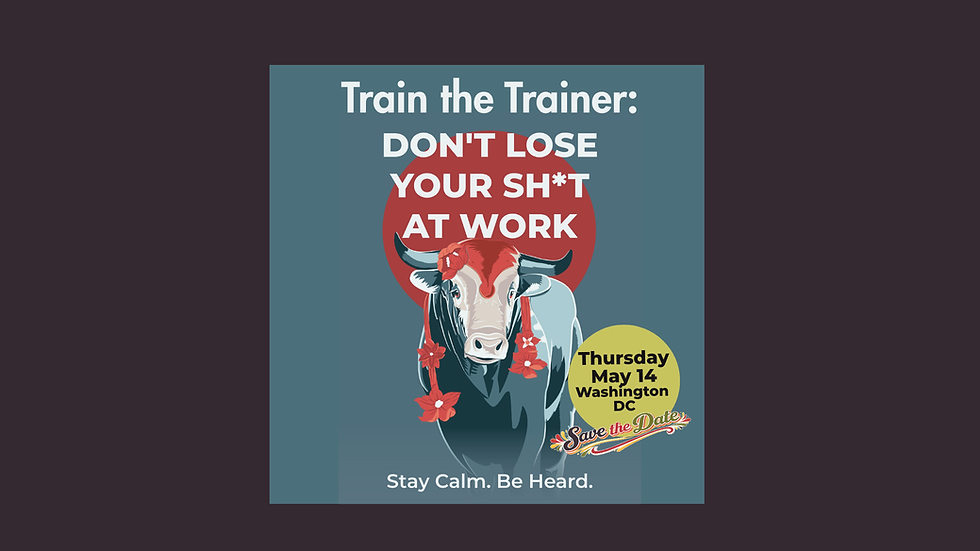
Train the Trainer: Don't Lose Your Sh*t at Work
Give your team the tools to handle stress, conflict, and miscommunication without things blowing up or shutting down.
Online Workshop
Date and time is TBD
Webinar Series
About the event
About The Event
For Team Leaders and HR Professionals
Conflict doesn’t start with big blowups.
It shows up in small moments.
A dismissive look.
A shift in tone.
A curt email.
Unaddressed, tension builds and people default to their conflict habit.
Argumentative or cold shoulder.
Get louder. Get quieter.
Neither is wrong, but both can lead to bigger misunderstandings.
Conflict, in most cases, doesn’t escalate because of the topic but because of how we react, avoid, or mishandle it. This workshop draws from 20 years of research and thousands of participants across multiple countries. It’s based on the idea that conflict responses are patterned. Most fall into a “Now” or “Later” approach. Understanding both styles improves how teams communicate.
You’ll learn how to train teams to manage frustration and communicate in ways that build trust. You’ll also help them recognize patterns in themselves and others, so they can work through problems when emotions rise.
Through case studies and small group discussions, you’ll gain a practical approach to developing stronger communicators across your organization. Your team won’t just get through conflict. They’ll grow from it.
What You’ll Walk Away With
Understanding “Now” and “Later” communication patterns
A coaching framework for different conflict styles
Techniques for managing heated conversations
Greater consistency in how coworkers handle conflict
Stronger trust, respect, and alignment
What We’ll Focus On
The “Now” and “Later” dynamic and how they work together
Goleman’s five components of Emotional Intelligence
Five anger response patterns and their impact at work
Awareness of tone, energy, and presence before speaking
Direct communication that maintains respect and trust
Turning everyday conflict into productive conversations